
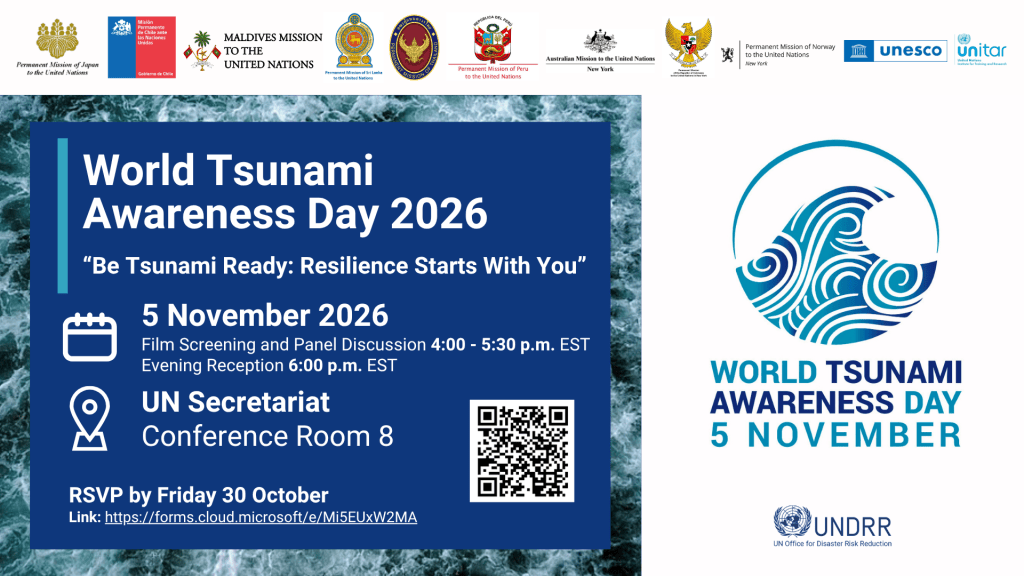
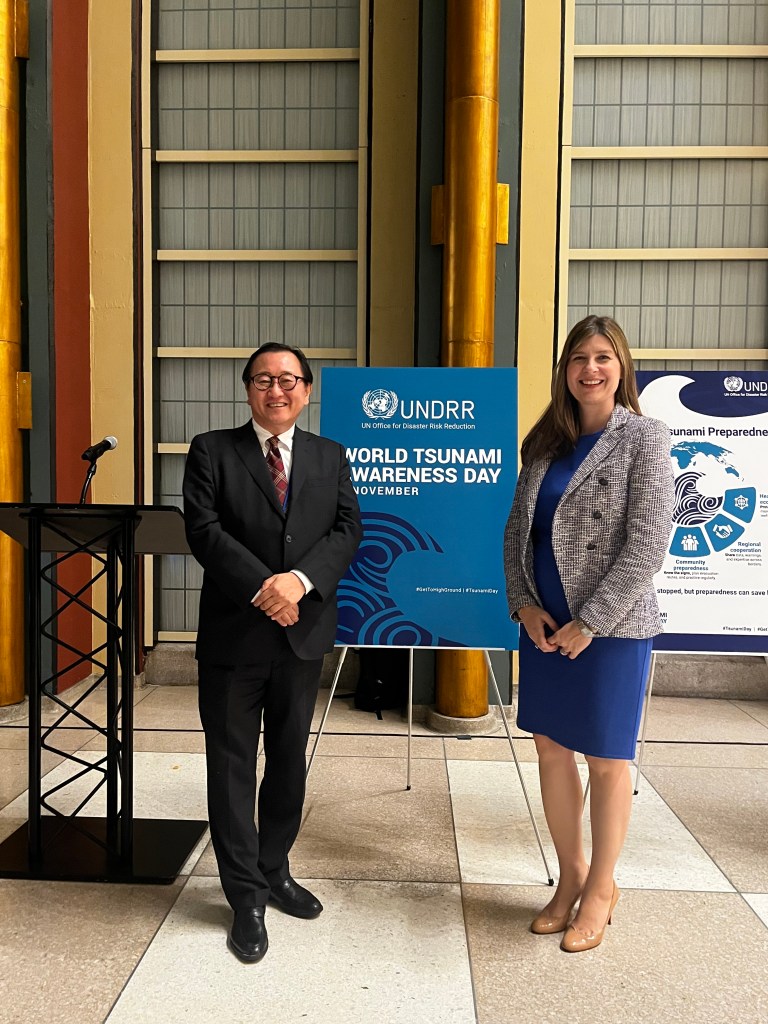
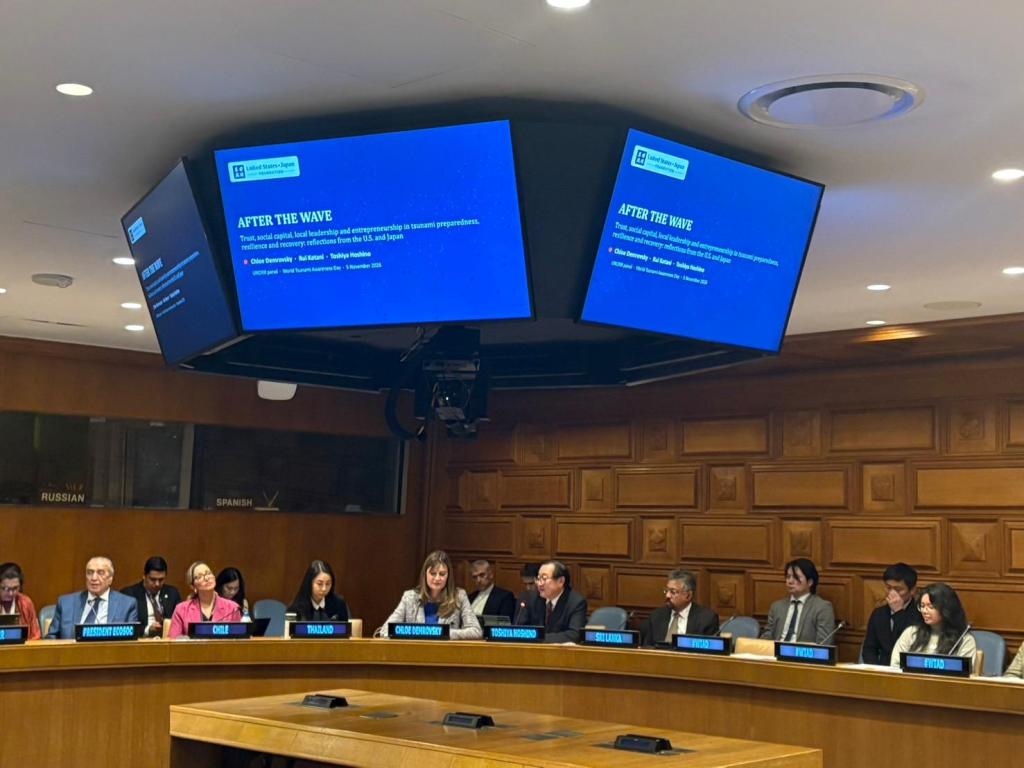
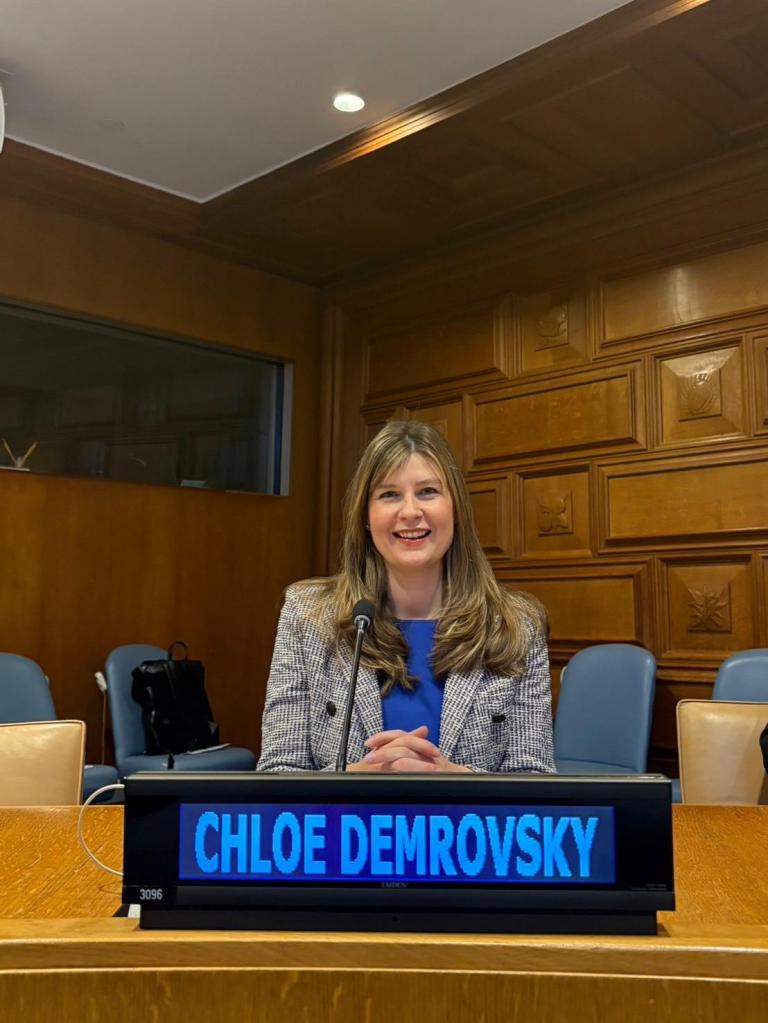
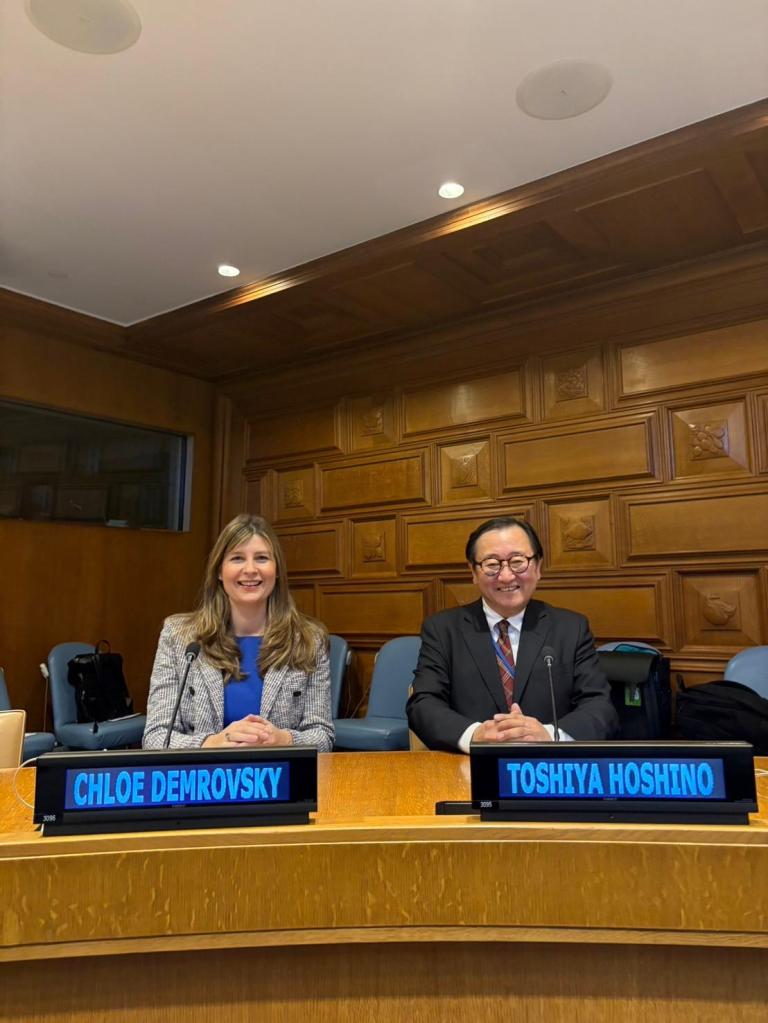
Yesterday was World Tsunami Awareness Day (#WTAD). To mark the occasion, I was grateful to have the opportunity to share some lessons learned from the U.S. and Japan at the United Nations Headquarters in New York.
This year’s commemoration of World Tsunami Awareness Day was held under the theme “Be Tsunami Ready: Resilience Starts with You”. This theme reminds us that resilience is built not only through systems and infrastructure, but also through informed individuals, prepared communities, and a shared culture of prevention. While tsunamis are relatively rare events, their impacts can be devastating, affecting lives, livelihoods, and development gains in a matter of moments. Over the years, significant progress has been made in strengthening tsunami detection, early warning systems, and risk-informed planning. Yet preparedness ultimately depends on individuals understanding the risks they face, communities knowing how to respond, and institutions working together to ensure that warnings reach everyone, especially those most vulnerable. When families, schools, local authorities, businesses and community leaders are prepared, entire communities become safer and more resilient. World Tsunami Awareness Day provides an important opportunity to reflect on these shared responsibilities.
Within the context of tsunami readiness, my intervention discussed how we have seen organizations prepare for and recover from disruption. Resilience is not only a matter of infrastructure and plans, but also of relationships, trust and local initiative. Social capital, local leadership and entrepreneurship are vital to the successful recovery of communities after area-wide disasters.
The findings are shared below in detail:
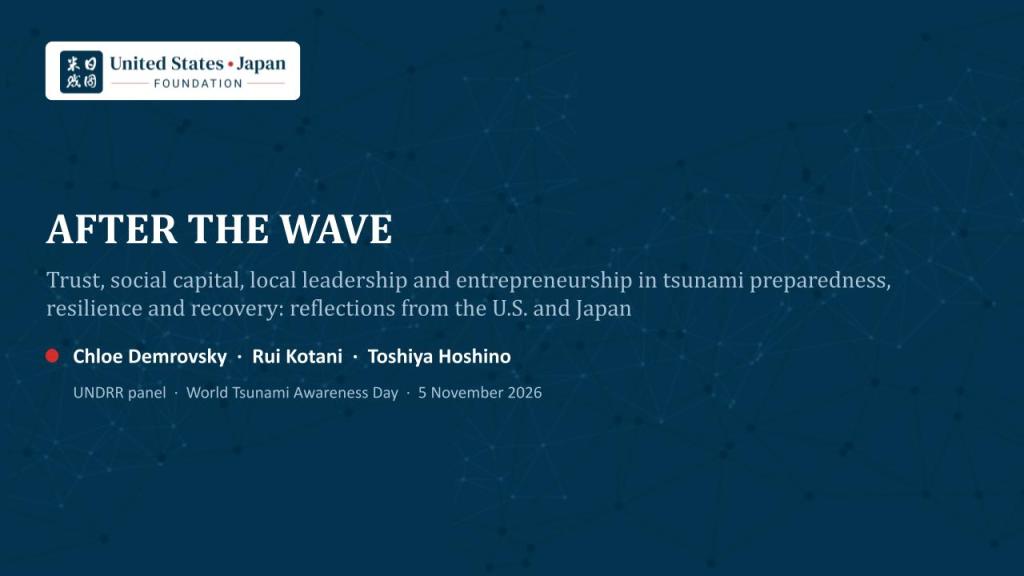
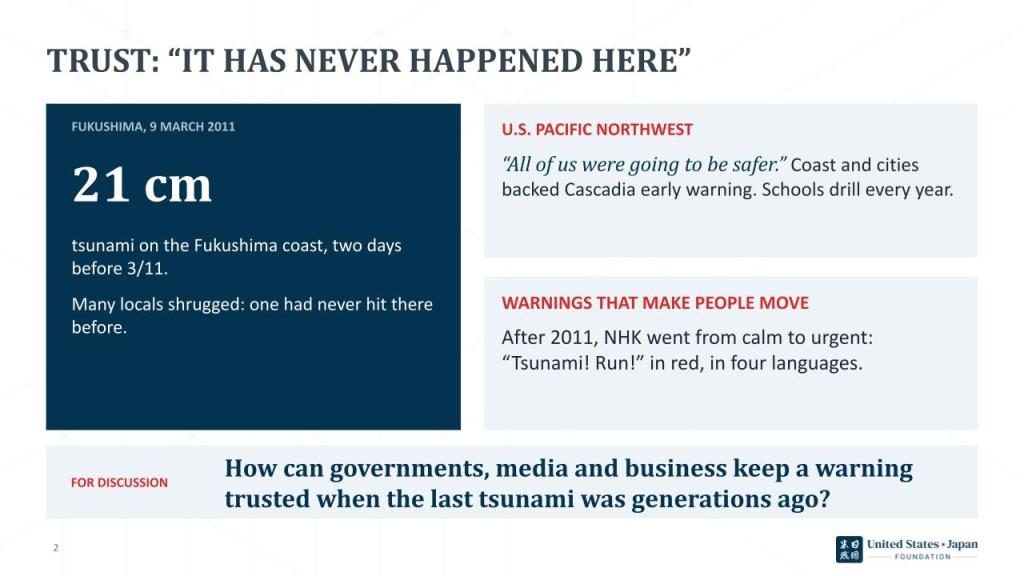
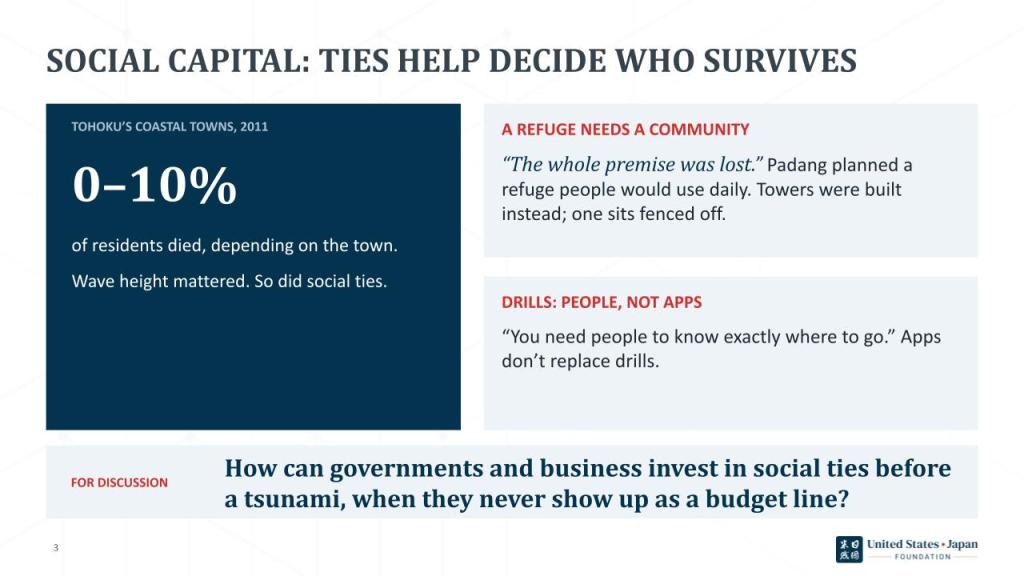
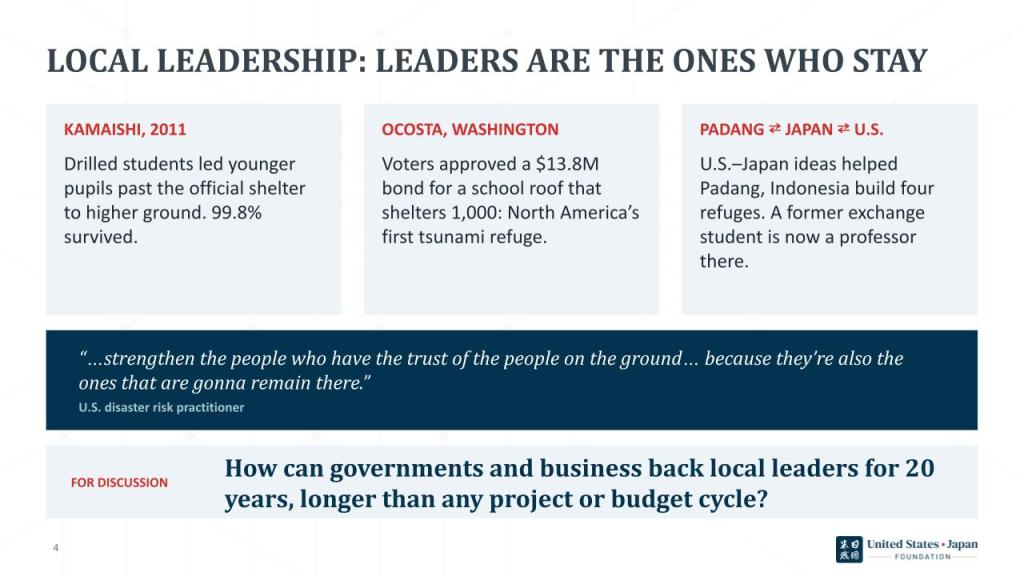
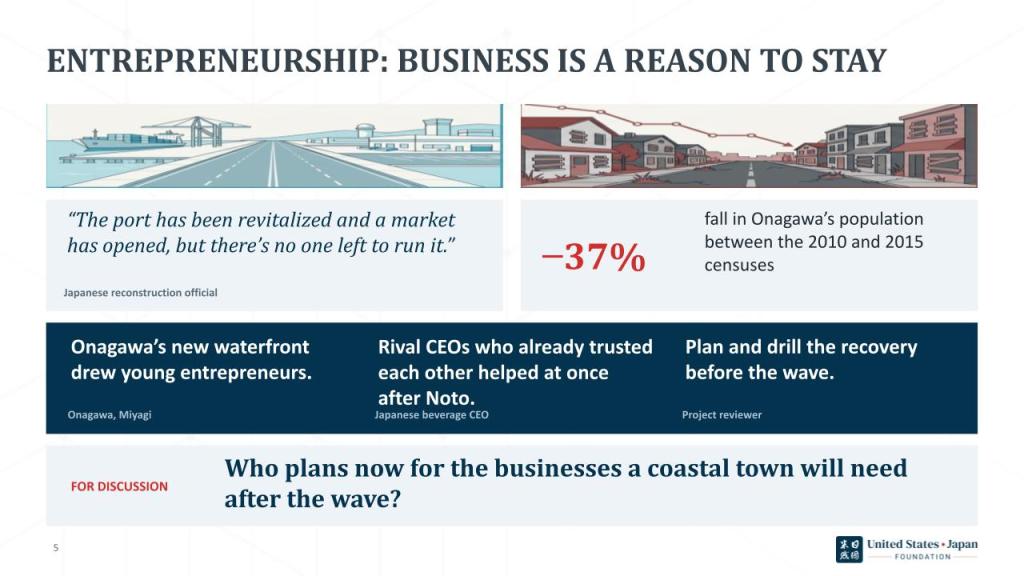
These findings are adapted from a broader project that I spearheaded together with two other US-Japan Leadership Program Fellows, Rui Kotani and Toshiya Hoshino from the University of Osaka.
The project is entitled “Advancing Disaster Risk Reduction in a Changing World: Lessons Learned from the U.S. and Japan—and Investments for the Future.” The U.S. and Japan are uncontested leaders in disaster risk reduction (DRR) and have similar risk profiles, so peer-to-peer learning would be valuable to decisionmakers in both countries. Despite having robust systems, both the U.S. and Japan face persistent gaps in local-level capacity, public-private coordination, and the integration of innovation into resilience planning that affect their economic competitiveness and investment profile. Large-scale action is required and more research is needed to aid decisionmakers in directing and right-sizing investments. This project would be an exploratory first step to have conversations with stakeholders in the space and promote peer-to-peer learning across both nations to better determine the need and appetite for further action. The work is graciously supported by and made possible by a grant from the United States Japan Foundation.
Thank you to our moderator Paola Albrito, Director at the United Nations Office for Disaster Risk Reduction as well as my distinguished fellows panelist including:
- H.E. Mr. Toshimitsu Motegi, Minister for Foreign Affairs of Japan
- Mr. Emiliano Rodríguez Nuesch, Tsunami Ladies Creator
- H.E. Mr. Roberto Ampuero Espinoza, Ambassador Extraordinary and Plenipotentiary, Permanent Representative of Chile
- H.E. Ms. Pawaree Xuto Chaipatiyut, Ambassador, Deputy Permanent Representative of Thailand to the United Nations
- Ms. Fesola’i Faamanatu Molly Nielsen, Chairperson, National Tsunami Ready Board, ACEO, Disaster Management Office, Samoa Ministry of Natural Resources and Environment
- Mr Toshiya Hoshino, Co-Representative, ESG Integration Research and Education Center, from the University of Osaka and my collaborator of this project
- A group of inspiring high school students from Morioka City, Iwate Prefecture, Japan who served as Chair and Co-Chairs of the High School Students Summit on World Tsunami Awareness Day, held in Iwate in October
- And interventions from H.E. Mr. Jayantha Jayasuriya, Ambassador Extraordinary and Plenipotentiary, Permanent Representative of Sri Lanka and H.E. Mr. Ali Naseer Mohamed, Permanent Representative of the Maldives. Ambassador.
It was a privilege to support this life-saving work.

